

Tattoo Aftercare FAQ 2026: The Questions Everyone Is Asking
Fresh ink comes with a flood of questions, and a lot of conflicting advice online. Here are the answers to the most-asked tattoo aftercare questions in 2026, straight and simple.
How long does a tattoo take to fully heal?
The surface heals in 2 to 4 weeks. But full healing, where the deeper layers of skin finish settling, takes 3 to 4 months. Don't judge your tattoo's final look until it's had that full window.
When should I remove the wrap or bandage?
Modern guidance favors removing plastic wrap within the first 1 to 2 hours, not overnight like older advice suggested. Skin needs to breathe. The exception is medical-grade film (like Saniderm or Tegaderm), which is designed to stay on for several days, so follow the specific instructions for that product.
Can I shower with a new tattoo? What about baths or pools?
Quick showers are fine. Baths, pools, hot tubs, lakes, and the ocean are not. Avoid full submersion for at least 2 to 3 weeks. Chlorine, bacteria, and prolonged water exposure can cause fading, infection, and ink loss.
Petroleum-based or petroleum-free: does it actually matter?
It's the single biggest ingredient decision in aftercare, and yes, it matters.
Petroleum-based products (Aquaphor, Vaseline, A&D and similar) work by sitting on top of the skin and sealing it. That's genuinely useful for a wound, but the trade-off is occlusion. The heavier the seal, the less the skin vents. Applied too thickly, petroleum-based products can create what artists call the greenhouse effect: trapped moisture, trapped bacteria, softened scabs, slower healing. This is why guides that recommend Aquaphor typically follow with a warning to use far less than feels natural. The product demands restraint to work safely.
Petroleum-free balms take a different approach. Instead of sealing the skin off, plant-butter formulations (shea, mango, coconut) hydrate while still letting the skin respire. There's no greenhouse effect to manage, because there's no impermeable layer to begin with. That means the margin for error is wider. Over-applying a breathable balm is a waste of product, not a healing risk.
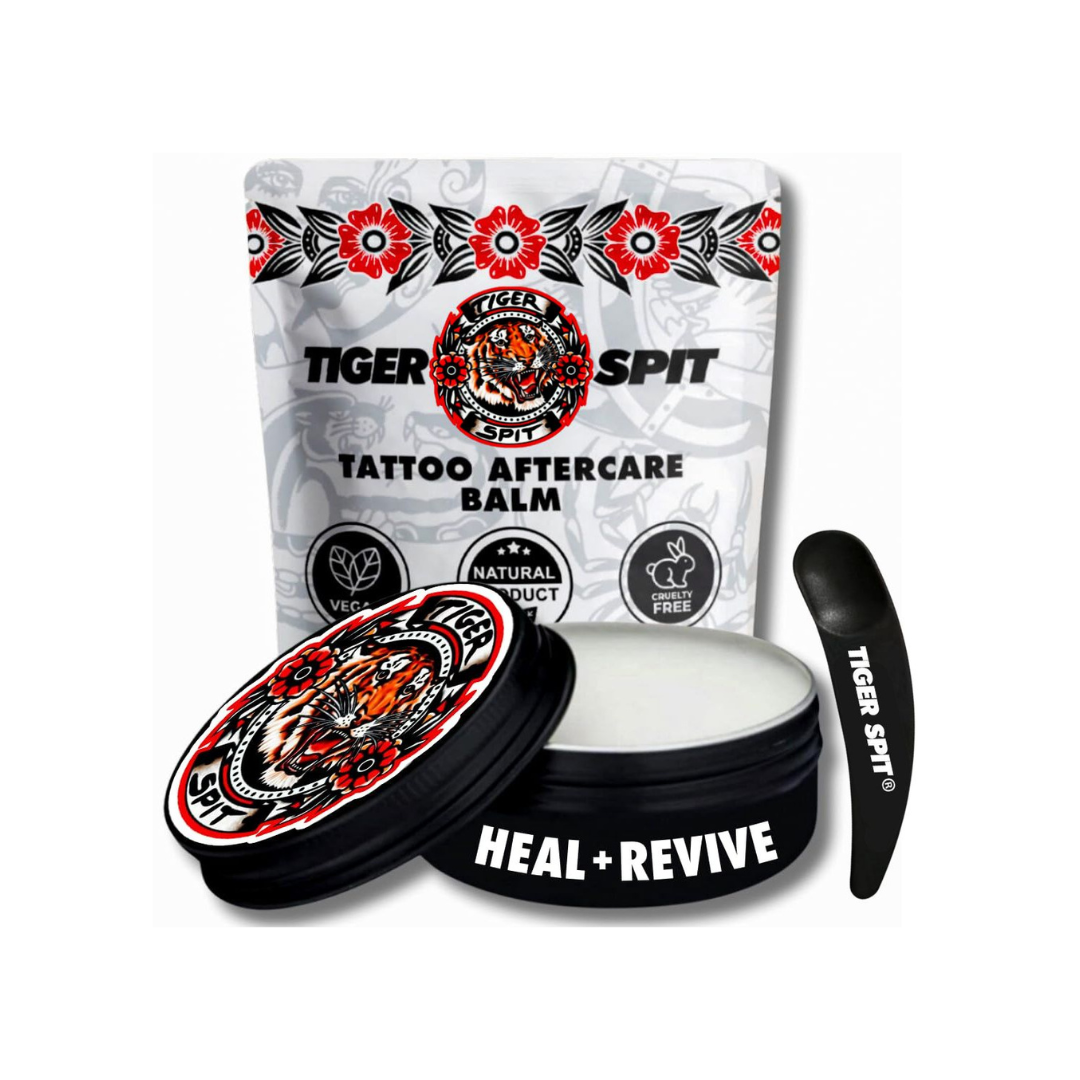
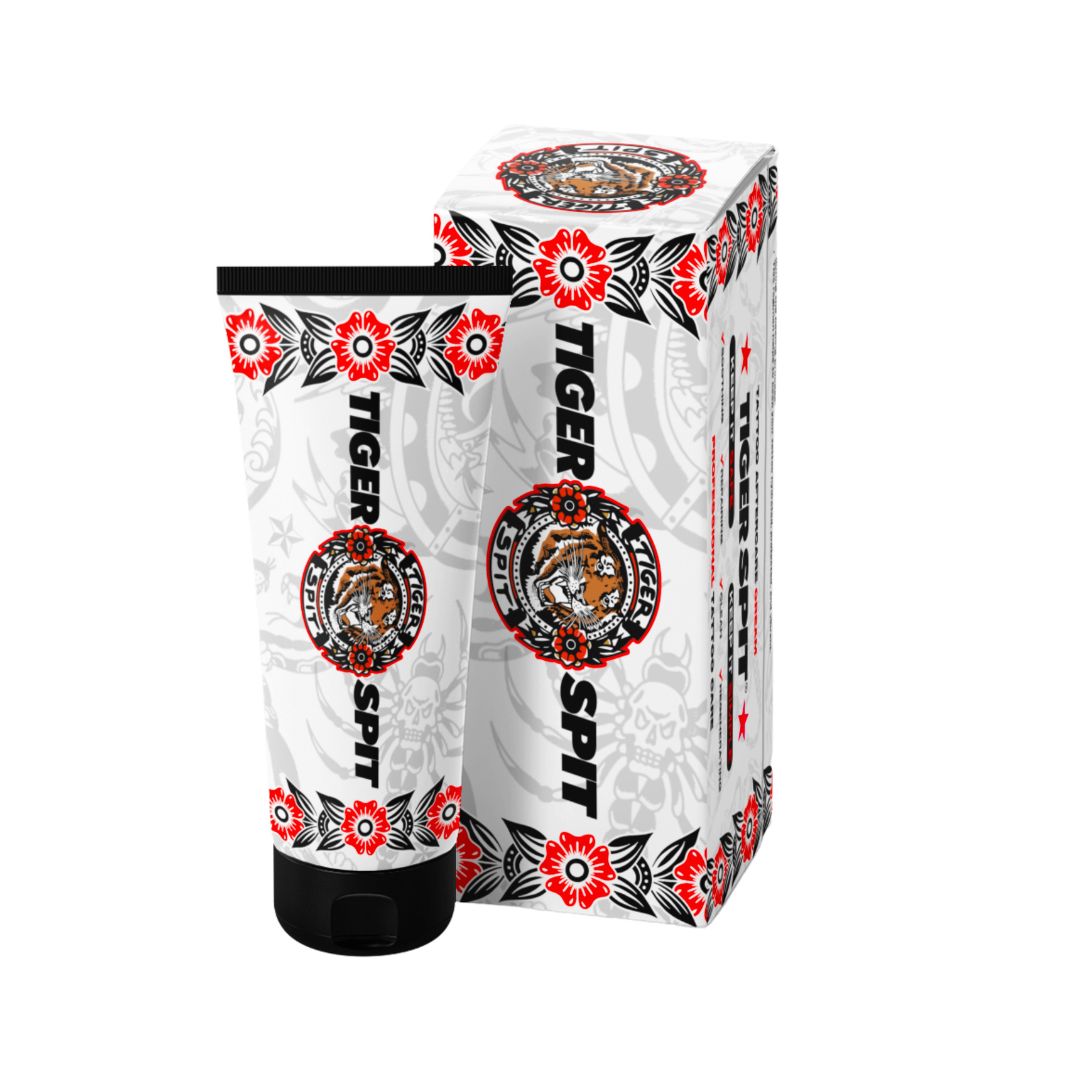
Tiger Spit's balms are petroleum-free and vegan, made in Italy. The formulation choice is the point. Breathability isn't a feature added on top, it's the design.
When do I switch from ointment to lotion, and do I have to?
With petroleum-based ointments, yes, around day 4 or 5. Once the plasma phase passes, that heavy seal becomes a liability rather than a help, so guides tell you to switch to a lighter lotion.
With a breathable balm, the switch is less about necessity and more about preference. The same balm can carry you from day 2 through the peeling phase and into long-term maintenance at month 4, because it was never suffocating the skin in the first place. Fewer products, fewer transition points, fewer chances to get the timing wrong.
Should I avoid Vaseline?
Generally, yes. Pure petroleum jelly is the heaviest, least breathable option on the shelf. It's the far end of the occlusion spectrum. It traps bacteria against healing skin with no venting at all. Even artists who are comfortable with Aquaphor tend to draw the line here.
Is Neosporin safe to use on a tattoo?
No. This is one of the most flagged mistakes in 2026 guides. Antibiotic ointments like Neosporin are made for cuts and scrapes, not tattoos. Some formulations can actually pull ink out of the skin and trigger reactions.
Film method or traditional wrap-and-lotion: which is better?
Film (Saniderm, Tegaderm, and similar) has become the preferred method for most artists, and for good reason. It seals the tattoo in its own plasma, reduces scabbing significantly, and speeds up visible healing. If it works for you, it works well.
But film isn't universal, and the cases where it fails are common enough to plan for:
- Adhesive sensitivity. A meaningful share of clients react to the adhesive itself, with redness, itching, or irritation that's worse than what the film prevents.
- Oily skin. Film needs a clean seal. Oily skin breaks that seal, and a partially-lifted film is worse than no film, because it lets bacteria in while trapping moisture.
- Flex joints. Elbows, knees, inner arms, hands. Constant movement lifts edges, and a peeling film mid-heal is a problem.
- Long or large pieces. Heavy plasma output can overwhelm the film's capacity, forcing an early change.
If any of those apply to you, traditional care isn't a downgrade, it's the correct method. What it asks for is a balm that works consistently across the whole healing window, so you're not managing a product schedule on top of everything else.
How do I know if my tattoo is infected or just healing normally?
Redness, mild swelling, and warmth in the first few days are normal. Watch for red flags instead: spreading redness (especially in streaks), increasing pain after day 3 or 4, heat that's getting worse rather than better, yellow or green discharge, or fever. If you see any of those, contact your artist or a doctor.
Why is my tattoo peeling and flaking?
This is completely normal, usually starting around day 4 and peaking in week two. Your skin is shedding damaged surface cells while the ink underneath, sitting deeper in the dermis, stays put. Don't pick. Let flakes come off on their own.
Why does my tattoo look cloudy or "milky"?
Around week three, many tattoos develop a hazy, frosted-glass look. This is the "milky veil," new skin still maturing over the ink. It's a normal phase, not a problem, and it clears as the skin finishes settling.
Is itching during healing normal, and how do I deal with it?
Yes, especially during the peeling phase in week two. Resist scratching. A thin layer of fragrance-free moisturizer usually calms it. If itching is severe or accompanied by a rash, that's worth flagging to your artist.
When can I apply sunscreen?
Never on a healing tattoo. Once it's fully healed, sunscreen becomes essential. UV exposure is the number one cause of long-term fading. Cover healing tattoos with clothing instead of sunscreen if they'll be in the sun.
Petroleum-free, vegan, made in Italy. Tiger Spit balms are built to breathe. One product from day 2 through month 4, with no greenhouse effect to manage.