


Fine Line Tattoos Are 2026's Biggest Trend — But Aftercare Makes or Breaks Them
If you've spent any time on tattoo TikTok or Instagram lately, you already know: fine line tattoos own 2026. Delicate florals, single-needle script, micro-realism portraits, and minimalist symbols are everywhere — and unlike a lot of viral styles, this one isn't fading. It's evolving, splitting into hyper-specific niches like ornamental linework, sticker-style collections, and subtle color accents.
But here's what most of the trend articles leave out: the very thing that makes fine line tattoos beautiful is also what makes them fragile. And that's where aftercare stops being optional.
Why fine line tattoos are different to heal
Traditional bold work packs dense ink into the skin with thicker needles and heavy saturation. Fine line work does the opposite. It uses a single needle or a tight grouping, which causes less trauma to the skin — so surface healing is often faster. That sounds like good news, and partly it is.
The trade-off: thinner lines mean less ink density, and the pigment sits closer to the surface of the skin. There's far less room for error. A bold traditional piece can absorb a few aftercare mistakes and still look great in five years. A fine line tattoo cannot. Over-moisturizing, repeated friction, or even moderate sun exposure during healing can blur or shift those crisp lines before they've fully settled.
The mistakes that ruin fine line work
- Over-moisturizing. Around week two, a fine line tattoo can look milky, dull, or washed out as a new layer of skin regenerates over it. The tattoo hasn't faded — it's healing. Slathering on more balm to "fix" the look just suffocates the skin and is counterproductive.
- Aggressive cleaning. Scrubbing with rough cloths or harsh, alcohol-based products dries out and irritates the delicate lines.
- Friction. Bag straps, tight clothing, even a backpack on a long commute — repeated low-grade pressure adds up and can lift ink out of thin lines.
- Sun exposure. Fine line ink is more susceptible to UV fading than dense traditional work. Healing skin plus sun is the fastest way to a blurry result.
- Picking and scratching. Even light contact can permanently pull pigment from thin lines. This is the single most damaging thing you can do.
What good fine line aftercare actually looks like
The goal is simple: keep the skin clean, lightly moisturized, and protected — without overloading it. That means a thin layer of a clean, fragrance-free balm, not a thick greasy coat. Petroleum-based products and heavy ointments can clog the skin and trap bacteria, which is the last thing delicate linework needs.
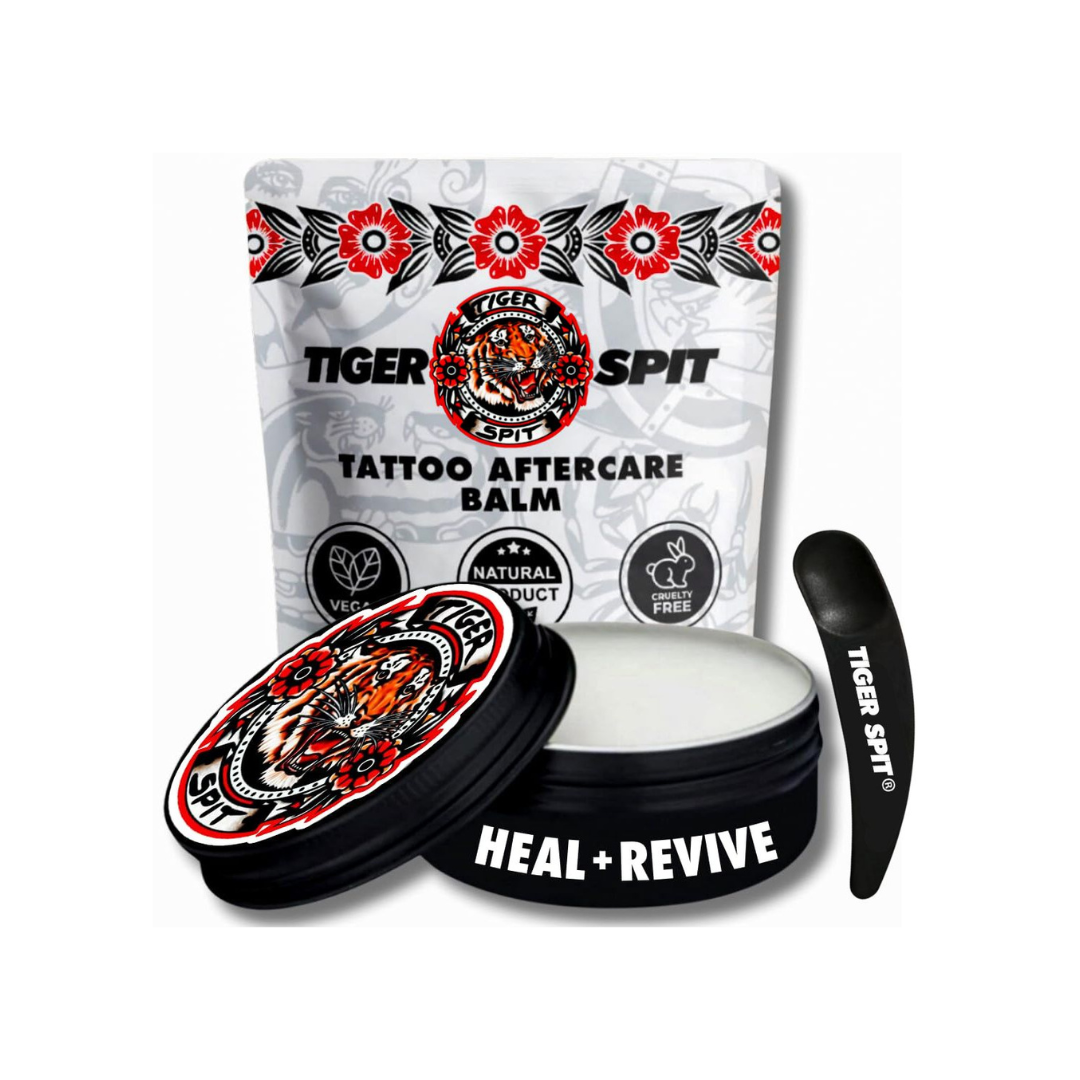
This is exactly why we built Tiger Spit Tattoo Aftercare Balm the way we did: 100% natural, vegan, petroleum-free and fragrance-free, formulated to absorb quickly and let the skin breathe while it heals. For fine line work, a light, clean balm isn't a nice-to-have — it's the difference between crisp lines a year from now and a soft, blurry version of what you paid for.
The bottom line
Fine line tattoos are the defining trend of 2026 precisely because they look like drawings on skin — intricate, personal, elegant. But that delicacy comes with a responsibility. The artist gives you the lines; aftercare keeps them. Treat a fine line tattoo like the fine piece it is, and it'll stay sharp for years.
New to fine line healing? Read our week-by-week fine line healing guide next, and see the full Tiger Spit aftercare range.