


Vegan tattoo aftercare: why it matters (and why it works better)
Why your tattoo aftercare ingredients matter more than you think
You'd be surprised how many "premium" tattoo aftercare products on the market still contain ingredients that haven't changed since the 1950s: petroleum, lanolin, parabens, synthetic fragrances. They work — sort of — but they're nowhere near optimal for healing.
The shift toward vegan tattoo aftercare isn't just a trend or ethics statement. It's about using products that actually heal better, irritate less, and respect both your skin and the planet.
Here's why vegan formulas are taking over the professional tattoo industry.
What does "vegan tattoo aftercare" actually mean?
A vegan tattoo aftercare product contains zero animal-derived ingredients. That means:
- No beeswax (used as a thickener in many balms)
- No lanolin (sheep wool grease, common allergen)
- No animal-derived glycerin
- No carmine or other animal pigments
- No collagen from animal sources
Instead, vegan formulas use plant-based alternatives: shea butter, cocoa butter, coconut oil, jojoba oil, candelilla wax, calendula extract, aloe vera.
The 5 reasons vegan aftercare works better
1. Fewer allergens
Lanolin is one of the most common contact allergens in skincare. Beeswax can trigger reactions in people with bee allergies. Removing animal derivatives means fewer surprise reactions on already-stressed skin.
2. Cleaner ingredient profile
Vegan tattoo brands tend to be more transparent about ingredients in general. You're more likely to find formulas without:
- Petroleum derivatives
- Parabens
- Synthetic fragrances
- Mineral oil
- PEGs
This isn't a coincidence — brands committed to vegan ethics usually also prioritize clean chemistry.
3. Plant ingredients heal differently
Plant-based actives like calendula, chamomile, and aloe vera have well-documented anti-inflammatory and skin-regenerating properties. They support the skin's natural healing process rather than just creating a passive barrier.
4. Better for sensitive skin
Many people don't realize they're sensitive to lanolin or beeswax until they react to it. Vegan formulas eliminate this entire category of potential irritants — great news if you have sensitive skin or unknown allergies.
5. Ethical alignment with the tattoo community
A growing portion of tattoo clients are vegan or environmentally conscious. Tattoo artists who offer vegan aftercare options (and use vegan ink and stencil products) build stronger relationships with this audience.
What to look for in a vegan tattoo aftercare product
Not all "vegan" products are equal. Here's the checklist:
- ✅ Certified vegan (or clearly stated on packaging)
- ✅ Cruelty-free — not tested on animals
- ✅ No petroleum, no parabens
- ✅ Plant-based actives with proven efficacy (calendula, allantoin, panthenol from plant sources, aloe vera)
- ✅ Fragrance-free or only essential oils in low concentrations
- ✅ Clearly labeled ingredients — if you can't read the INCI list, that's a red flag
Common myths about vegan aftercare
Myth #1: "Vegan products don't moisturize as well"
False. Plant oils and butters (shea, cocoa, jojoba) are among the most effective moisturizers in cosmetic chemistry. They're rich in fatty acids and vitamins.
Myth #2: "Vegan means weak or watered down"
False. Many vegan tattoo balms are anhydrous (zero water content), making them more concentrated than typical creams.
Myth #3: "It's just marketing"
Partially true — some brands slap "vegan" on the label without doing the work elsewhere. That's why you check the full ingredient list, not just the marketing claims.
The TIGER SPIT approach
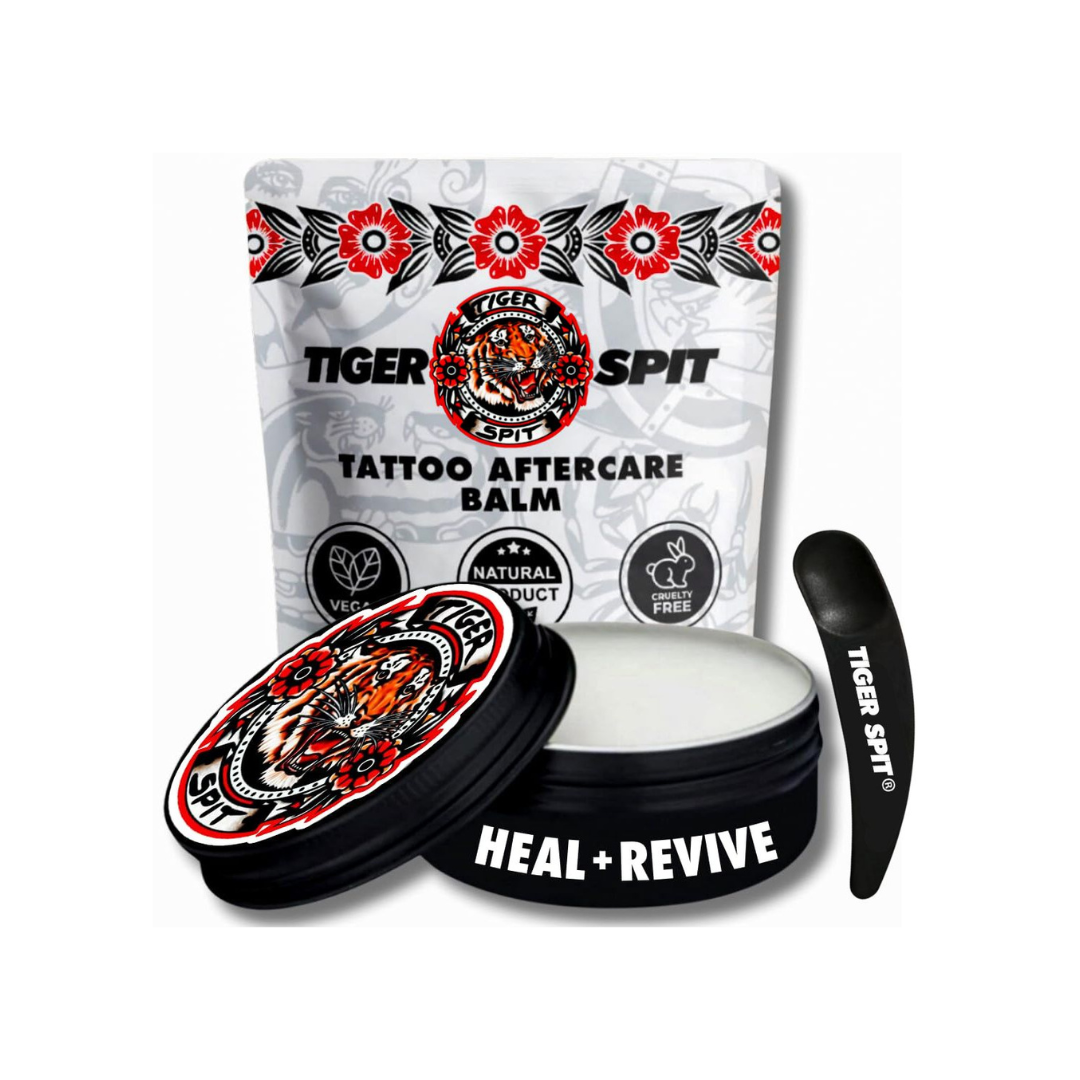
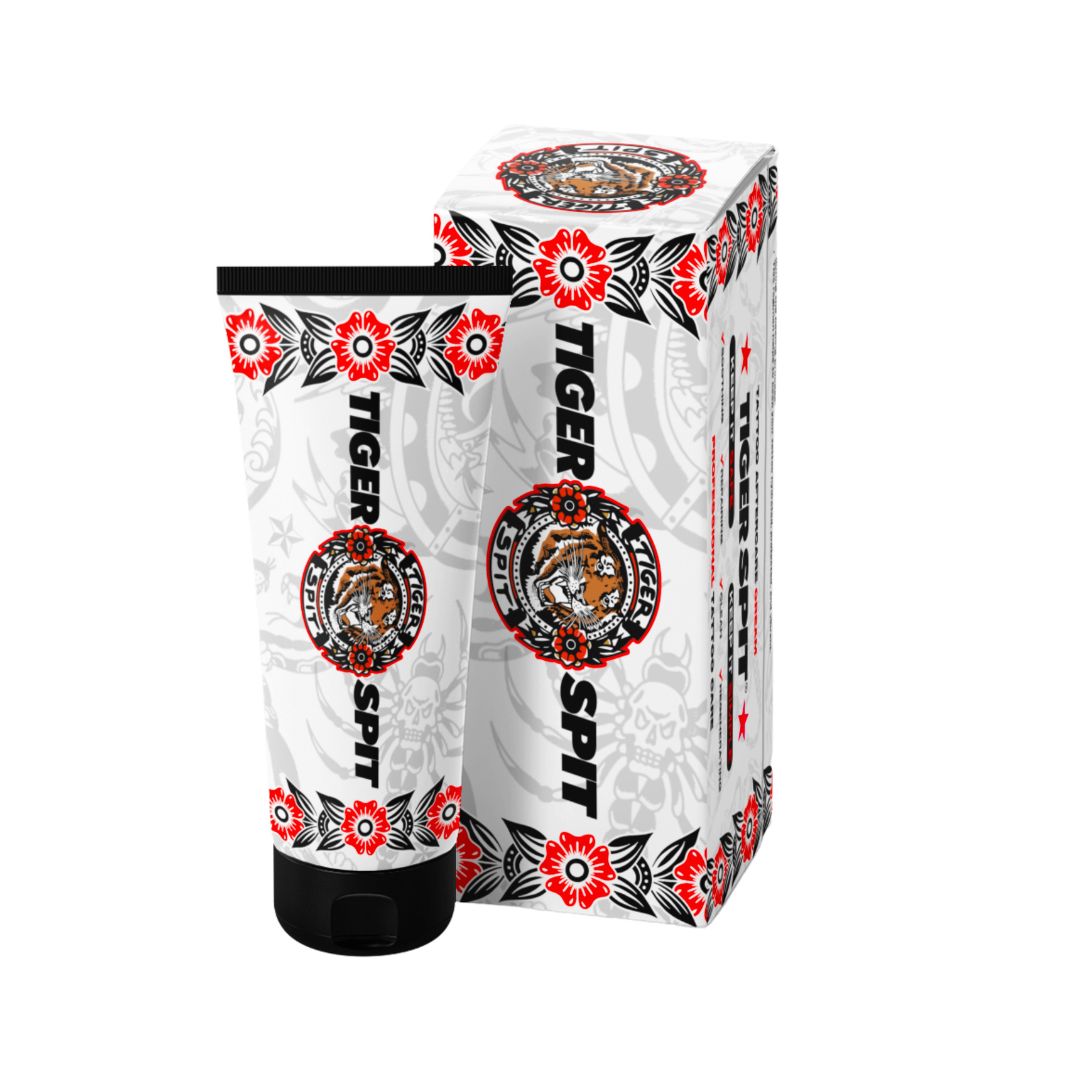
At TIGER SPIT, vegan isn't a marketing checkbox. It's a foundational choice. Our entire tattoo aftercare line is:
- 100% vegan — no animal derivatives anywhere
- Petroleum-free — plant oils and butters only
- Paraben-free — no synthetic preservatives
- Made in Italy — traceable supply chain, quality manufacturing
The result: products that heal effectively, smell clean, and respect everyone — your skin, animals, and the planet.
How to switch from conventional to vegan aftercare
If you've been using A&D, Aquaphor, or other petroleum-based products, here's how to make the switch:
- For new tattoos: start fresh with a vegan balm from day one
- For existing tattoos in healing: wash thoroughly, then apply vegan balm — you'll notice less greasiness immediately
- For long-term maintenance: a vegan tattoo lotion or cream daily keeps colors brighter and skin healthier
Bottom line
Vegan tattoo aftercare isn't about labels or ethics performance — it's about using ingredients that actually work better for fresh tattoos and long-term ink preservation.
If you're tired of greasy petroleum products that clog your pores and dull your tattoos, try a clean vegan alternative. Your skin (and your tattoo artist) will thank you.
Discover the full TIGER SPIT vegan tattoo aftercare line — trusted by professional artists across Europe.